HUMAN RESOURCE DEVELOPMENT IN TOURISM IN INDIA
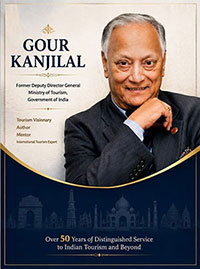
Dr. Gour Kanjilal
[ Tourism Representative Govt Of India ]
In a very short time, tourism has become one of the world's most important industries. Tourism is a service industry, and the quality of service makes all the difference between competing destinations. In India, there is a tremendous shortage of trained manpower in the hospitality sector. In a rough estimate of about 100,000 hotel rooms that are in the pipeline and 60,000 more that are required immediately, the total manpower requirement to service the hospitality sector has been projected to be about 25,000 per year. Against such a requirement, the actual output from the Govt. institutes is only about 7,000 per year. Even if all the other private institutions are taken into account, the total availability of trained manpower does not exceed 15,000 in a year.
The need to develop the required human resources in various segments of the tourism industry has become imperative as a consequence of the rapid growth in tourism, rapidly changing technology, and dynamic changes in the international market.
The main problems and constraints involving human resource development in the tourism sector are:
a) Shortage of qualified manpower;
b) Shortage of tourism training infrastructure and qualified trainers;
c) Working conditions in the tourism sector; and
d) Lack of strategies and policies for human resource development in the tourism sector.
To provide adequate qualified manpower in the service sector, the Govt. took up the initiative of setting up Institutes of Hotel Management and Applied Nutrition all over the country from 1962 in the Ministry of Tourism. To begin with, four Institutes of Hotel Management, Catering and Technology and Applied Nutrition were set up in New Delhi, Mumbai, Chennai, and Kolkata between 1962 and 1964. In order to meet the training requirements at craft levels in specific disciplines, 12 Food Craft Institutes were set up at different places in the country.
The orientation of the training programmes, which were in vogue till 1982, underwent a sea change with the transfer of this programme to the Ministry of Tourism in October 1982. It was decided to orient the training towards meeting the requirement of the accommodation and catering industry to produce a professional workforce.
In order to harness the resources and provide a central thrust, the Ministry of Tourism established the National Council of Hotel Management and Catering Technology in 1984. The main objective of the Council is—
(i) To advise the government on coordinated development of Hotel Management and Catering Education.
(ii) To keep updated records of all international developments in this area and serve as a Technical Storehouse for use in training suitable training programmes for affiliated institutions and prescribe courses of study and instructions leading to examinations conducted by it.
(iii) To standardise courses and infrastructure requirements.
(iv) To prescribe educational and other qualifications, experience, etc., for the members of staff in the affiliated institutions and introduce faculty development programmes.
(v) To give certification and accreditation at the national level.
As a result of the above changes that have taken place for expanding and modernising the training capabilities of the Hotel and Catering Education programme, the profile of the students of these Institutes has undergone a change, as has the reaction of the industry to their acceptance. At present, there are 20 Institutes functioning in the country.
In order to strengthen the existing training infrastructure, a National Culinary Institute and an Advanced Hotel Management Institute are also proposed in the Ninth Plan.
The intake of candidates for the first year of the 3-year diploma course in Hotel Management is about 2,000, and efforts are being made to increase the capacity. The Diploma course on Hotel Management & Catering Technology has been recognised by the All India Council of Technical Education.
All the Hotel Management & Food Craft Institutes are registered under the Societies Registration Act, 1860, and have separate Boards of Governors consisting of representatives of the industry. The Institutes of Hotel Management & Catering Technology & Applied Nutrition and the National Council for Hotel Management are funded by the Central Government through grants-in-aid. Land for the construction of the Institutes, which are located in various parts of the country, is, however, given free of cost by the respective State Governments. In the case of Food Craft Institutes, the financial responsibility rests with the Central Government only for the first five years of their operation and thereafter with the respective State Governments.
TRAINING THE TRAINERS
There are a large number of training institutions in the area of tourism, travel trade, and hotel management functioning under the Department of Tourism. Identification of the training needs of Professors, Lecturers/Instructors serving in these training institutions has been done, and a comprehensive programme in Training of Trainers has been undertaken.
It is proposed to achieve Training for All in training technology courses consisting of Direct Trainer Skills and Design of Training in consultation with the Training Division of the Department of Personnel and Training. This will sensitise the faculty to the emerging trends in the area of training technology. The twin advantages will be the effectiveness of trainers and improved performance by students.
GUIDE TRAINING
The institution of guides is a very basic component of the tourism services, both for international and domestic tourists. With effect from February 1996, a three-tier system of guides has been introduced so as to serve the different market segments.
Regional Level Guides, trained by the Ministry of Tourism, Govt. of India, through their tourism offices or the Indian Institutes of Tourism and Travel Management.
State Level Guides, trained by the State Governments, and local guides to be trained under the supervision of the State Government/Local Administration.
The Government of India Tourism Offices assess the requirement of fresh guides in the region from time to time and take necessary action for conducting training courses in coordination with the Indian Institute of Tourism & Travel Management. Refresher courses and orientation programmes for customs and immigration officers and various service providers like taxi-drivers, porters, etc., have also been organised by the Government of India Tourist Offices.
Thus, streamlining and strengthening of guide training of grassroots-level workers has been given emphasis to improve the quality of services in respect of the guides in India.
In the National Tourism Policy, thus, there is special emphasis on Professional Excellence in the Human Resource Development Sector, and the action points include—
- Strengthening the institutional set-up for human resource development, including the setting up of our Advanced Institute of Hotel Management and a Culinary Institute.
- Qualitative improvement and modernisation of existing training institutions.
- Setting up at least one Food Craft Institute in each State, particularly in North Eastern States.
- Improving the standards through accreditation and Quality Control.
- Setting up a National Tourism Documentation Centre equipped with modern technology systems to function as a repository of research findings and publications on tourism.
- Involving the tourism industry in human resource development activities and encouraging them to set up independent training facilities.
HUMAN RESOURCE COOPERATION BODY
South Asia Integrated Human Resource Development Programme (SAIHRDP)
The European Union launched a programme in 1995 to develop the training skills of the managers in the hospitality industry in South Asian Region to train the lower level staff in specific jobs. The programme was monitored by a committee of SAARC countries and the execution of the programme was managed by National Level Committees.
The Indian Committee conducted 46 such training programmes and trained 955 trainers. Manuals for trainers and trainees were prepared under the programme, and testing facilities have been established in national institutes. A national system of certification in various trades has also been established.
“A unique selling proposition is no longer enough. Without a unique selling talent, it may die.”
Dr Gour Kanjilal
[ Tourism Representative Govt Of India ]