Digital Agenda and Artificial Intelligence to Redesign Tourism
By Dr Gour Kanjilal
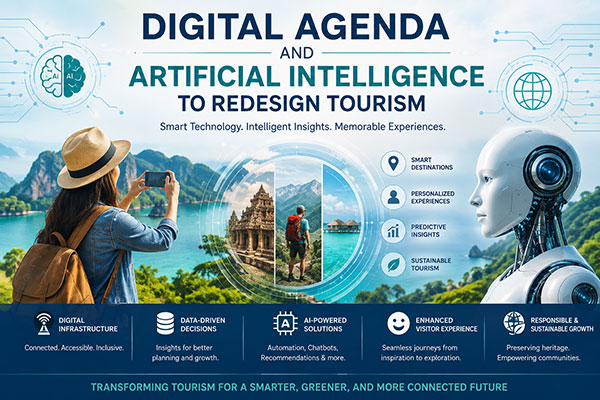
Every year, World Tourism Day reminds us of tourism's vital role in fostering economic growth, cultural exchange, and sustainable development. The 2026 theme, "Digital Agenda and Artificial Intelligence to Redesign Tourism," reflects the rapid transformation taking place across the global travel and tourism industry. Digital technologies and Artificial Intelligence (AI) are no longer optional innovations—they are becoming essential tools for building a smarter, more resilient, and more inclusive tourism ecosystem.
The modern traveler expects seamless digital experiences. From researching destinations and booking flights to checking into hotels and discovering local attractions, technology has become an integral part of every stage of the travel journey. Artificial Intelligence is further enhancing this experience by providing personalized recommendations, multilingual virtual assistants, intelligent customer support, dynamic pricing, and real-time travel information. These innovations improve convenience while enabling tourism businesses to better understand and serve their customers.
For destinations, AI and digital technologies offer significant opportunities for sustainable tourism management. By analyzing visitor data, authorities can better manage tourist flows, reduce overcrowding, protect cultural and natural heritage, and improve infrastructure planning. Smart tourism solutions also help monitor environmental impacts, optimize energy use, and encourage responsible travel practices that benefit both visitors and local communities.
Digital transformation is equally important for tourism enterprises. Hotels, travel agencies, tour operators, transport providers, and destination management organizations can use AI-powered analytics to forecast demand, automate routine operations, strengthen marketing strategies, and deliver more personalized services. Small and medium-sized tourism businesses, in particular, can leverage affordable digital platforms to reach international markets, improve competitiveness, and expand their customer base.
However, technology should always complement—not replace—the human essence of tourism. Hospitality is built on trust, empathy, cultural understanding, and meaningful human interaction. While AI can automate repetitive tasks and enhance efficiency, authentic experiences created by local communities, guides, artisans, and hospitality professionals remain the true heart of travel. The future of tourism lies in combining technological innovation with genuine human connections.
As digital adoption accelerates, the industry must also address important challenges such as data privacy, cybersecurity, ethical AI, digital inclusion, and workforce development. Governments, educational institutions, tourism organizations, and private businesses must work together to ensure that digital transformation benefits everyone, including small enterprises, rural destinations, and underserved communities. Investing in digital literacy and professional training will be essential to prepare the tourism workforce for the future.
India is uniquely positioned to become a global leader in digitally enabled tourism. With initiatives promoting Digital India, smart cities, digital payments, and innovation, the country has built a strong foundation for transforming visitor experiences. AI-powered multilingual services, virtual heritage tours, intelligent destination management, and integrated digital travel platforms can further strengthen India's position as one of the world's most attractive tourism destinations while showcasing its rich cultural heritage.
World Tourism Day 2026 is not merely a celebration of technology; it is a call to redesign tourism for a better future. By embracing digital innovation responsibly and placing people at the center of development, the tourism sector can become more sustainable, inclusive, resilient, and accessible. Artificial Intelligence and digital transformation offer unprecedented opportunities, but their greatest value will be realized only when they enrich human experiences, protect cultural and natural heritage, and contribute to the well-being of communities worldwide.
The future of tourism is not defined solely by technology. It is defined by how wisely we use technology to create journeys that inspire, connect, and improve lives. As the world embraces the digital era, tourism has the opportunity to become smarter, greener, and more meaningful than ever before.