Brand Identity And Tourism
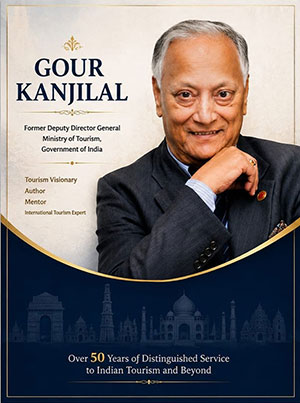
Dr. Gour Kanjilal
[ Author And Tourism Representative Govt Of India ]
The fact that, in its sheer size, diversity and experience, it was larger than 21 countries of Western Europe put together, with 25,874 km to spare, was significant. The Government was putting all its thinking into developing India into a global brand with worldwide brand recognition and strong brand equity. With a lot of thinking and deliberation came the “Incredible India” branding process, which focused on creating a unique identity for India as a tourism destination and differentiating it from its competitors.
The strategy was to reposition India as a premium destination for upmarket tourists, with all communications sharply focused on attracting niche segments.
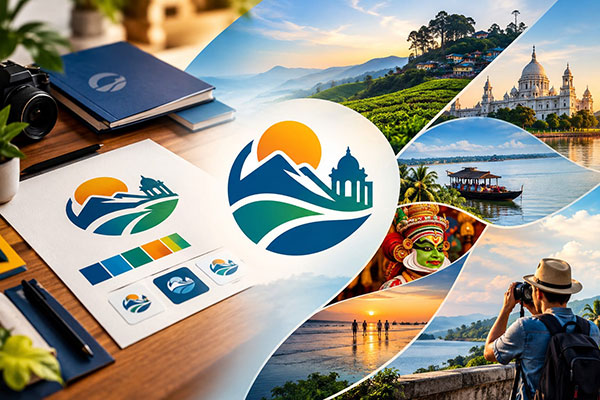
Thus, with great thought, the Incredible India Campaign was launched in 2001 as a brand identity, though the timing did not help, with negative events that followed globally, including September 11 in New York, the Indo-Pak border crisis, the Afghan War and the economic recession that followed. However, the Government was not disheartened and took the time for consolidation by forming public-private partnerships in a fruitful manner. (Joint Secretary-Tourism Report, 2003).
The campaign was launched with a well-synchronized integrated communications strategy in the prime traffic-generating markets. In partnership with the Experiences India Society, India Tourism released a powerful television commercial on prestigious worldwide channels, including CNN, BBC, Discovery and other TV channels. In synergy with this TV campaign, a print media campaign was released in leading publications such as Condé Nast Traveller, Vogue, Geo, Financial Express and leading in-flight magazines. The entire print and electronic media plan was detailed and monitored by India’s leading advertising agency, Ogilvy & Mather.
Integrating the electronic and print media was the online marketing campaign, which used some of the most visually powerful banner advertisements. The aggressive online campaign provided a complete digital experience to meet the requirements of travellers. The campaign, linked with a series of contests, was featured on all leading portals such as Yahoo, MSN and Google.
The electronic, print and internet campaigns were vigorously pursued with a fortnightly online newsletter sent to almost 25,000 tour operators and travel agents worldwide.
A global media meet comprising some of the finest travel writers from around the world was also organized. Travel writers were exposed to the new initiatives in Indian Tourism, which converged elements of culture, civic governance and new development strategies that had been initiated by the Government sector, such as Buddhist circuits (Ajanta-Ellora, Gaya-Bodhgaya, etc.), pilgrimage circuits, rural tourism and other new linkages, as well as the preservation of heritage monuments such as the Red Fort, Fort Cochin, Cochin, Chhattisgarh, etc.
They were taken on familiarization tours to experience the developmental activities so that, on returning home, they could write about their experiences. The PR exercise also enhanced unprecedented coverage of India as a holiday destination. India was featured in special issues of National Geographic, Travel & Leisure, Condé Nast, the New York Times, Vogue, Cosmopolitan and several in-flight magazines, with India being featured as a cover story.
Building a brand cannot be done in isolation from the reality on the ground. The emphasis was on the balanced development of all related areas through proper coordination. Indian planners looked into the interdependence and complementarity of the various components. This followed from the fact that tourism demand is for a composite product, and that the various tourist products and services are interdependent and complementary.
The supply of one—for example, international air transport to and from a destination—depends on the supply of another, such as hotel accommodation, and they complement each other. A destination...
Dr Gour Kanjilal
[ Author And Tourism Representative Govt Of India ]