AN INSIGHT INTO ECO-TOURISM IN INDIA
AN INSIGHT INTO ECO-TOURISM IN INDIA
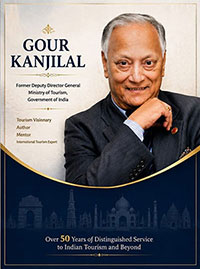
Dr Gour Kanjilal
[ Author And Tourism Represtitive Government Of India ]
Eco-tourism is the fastest growing segment of the tourism industry that attracts between 40 to 60% of all international tourists, translating into anything between 317 million to 528 million. The diversity of India is to be seen not only in its people, culture, religion, languages and life style, but also in fact that its different regions generate a different picture and exploring them provide a unique experience. Now all these are packaged for tourist to provide Eco-friendly holiday sojourn in India.
Indians have built in relationship with nature. The tradition of nature worship – animal worship and other elements of nature originate from primitive fear and need to propitiate those that present danger. There are many ecological zones which are part of our incredibly ancient multilingual, multi-cultural heritage. Out of this heritage has grown our compulsion to preserve the earth and fellow creatures because we owe them in trust for the future. Emperor Ashoka has realised the value of nature and natural wealth of India and had inscribed edicts to protect it. As far back the Hindu period 320 BC, there was an awareness of importance environment and its protection in India. But hardly people think that India is so sensitive to nature.
We are promoting tourism but while promoting tourism to eco-sensitive areas, the emphasis is to control the volume so that the fragile nature of the area is not disturbed. We know that to rebuild it, will take ages and nature is 65 great teacher as also great butcher (if not handled carefully). The whole objective of Eco-tourism is to have purposeful travel to natural areas to understand the culture, history of the environment, taking special care not to alter the integrity of the Eco-system while utilising the economic opportunities that make conservation of natural resources beneficial to local people. Thus travel to these areas enlightens, educates and revives the tired souls of the Eco-tourists and on the other hand provides a basis of economic upliftment to local people, tribes, or other stake holders directly dependant on the natural heritage. This strong relationship is primarily targeted through our Eco-tourism.
India's snowcapped Himalayas are one of our rich Eco-tourism destinations. It not only provide the base for adventure tourism activities in the form of mountaineering, skiing, rock climbing, mountain river sports, nature walk, orchids, plants – (all these activities are free from any power machine or pollution, the Himalayas house rare creatures such as snow leopard, musk deer, ibex, pheasants of all descriptions, this on the other side the great Indian desert of Thar which runs in the North West of India supports a surprising variety plants and animals. In fact with over 247 wildlife sanctuaries and 55 National Parks in India, there is every possibility of seeing a variety of animals typical to that habitat. Hardly people associate India with Wildlife and think Africa is the best. But India is the only house of Asiatic Lion (Gujarat), Tigers (which one does not see in
(Africa), single horned Rhinos, gharial variety of Crocodile, Royal elephants,Single humped Camels (as against double hump in Africa) mountain Yak, varietyof reptiles – list is endless. Options are plenty. A few selected ones include:-
i) Corbett National Park in Uttar Pradesh (access from New Delhi 290 kms –
six hours drive – Mid Nov-Mid June, good accommodation available – for tiger/
elephants
ii) Bandhavgarh National Park in Madhya Pradesh – access from Khajuraho
and then by car 210 kms – good accommodation in the form of Wildlife camp,
White Tiger Forest Lodge, Bandhavgarh Jungle Lodge are available; (season
Nov-June).
iii) Kanha National Park in Madhya Pradesh; access through BombayNagpur
and then by car 290 kms, accommodation available at Kanha Safari Lodge,
Mukki Jungle Lodge, Wild Chalet Resort – Kishi and season is Nov-June
iv) Ranthambore National Park in Rajasthan has access by air to Jaipur and
then by car 170 kms, Tiger Moon Resort, Sawai-Madhpur Lodge are available
– season Oct-June, Sasangir in Gujarat, Kaziranga National Park – season,
Sunderbans Tiger Reserve in West Bengal, Nagarhole National Park in Karnataka (access from Bangalore 240 kms and Kabini River Lodge provides good accommodation open from Oct-May), Periyar in Kerala are excellent
Eco-friendly and wildlife Heritage destinations. For many entry point from overseas to India, one can add little bit of wildlife or mountain holidays with
cultural tours in India. This makes India Eco-holiday packages much more interesting.
Green havens are not only in forests, the islands are also some of the best Eco-tourism destinations. Bangaram Island in Lakshadweep with thatched huts, with private showers and toilets, fishing, scuba diving to see that enchanting coral gardens, swimming in crystal sun warmed waters, sunbathing and exclusiveness at the resorts brings you so close to nature. The access to this resort is from Cochin and then to Agatti (by air 3 times a week) and then by boat/ helicopter and accommodation at Bangaram Island Resort offered by M/s. Casino
Group – Oct-March is the peak season. Advance booking is necessary. The Andamans located in India’s South eastern is the Island chain all covered with rain forests ringed by coral reefs, good for viewing marine life, swimming and sunbathing. The access is from Calcutta, Madras to Port Blair and
accommodation is available at Hotel Bay Island, Andaman Beach Resort, Mid Oct-April is the main season.
Mountain magic in the hills of Shimla, Kullu-Manali, Dalhousie, Palampur in Himachal Pradesh, Nainital-almora-Kausani in Kumaon Hills of Uttar Pradesh,
Panchmarhi in Madhya Pradesh, Ootacamund and Kodaikanal in Tamil Nadu, Matheran and Mahabaleshwar in Maharastra, Munnar in Kerala, Gangtok in Sikkim, Darjeeling/Kalimpong in West Bengal, Shillong in Meghalaya all will take one to well-wooded, good walking road, old temples, conifer/pine forests all around rising to snow dusted peaks, zigzag trekking routes, hot springs,
waterfalls, Sulphur baths, lakes, parks, local ethnic bazaars and all these provide such an experience which will linger in one’s mind forever. Our booklet about “Hill Holidays in India” will be good reference material to look for the Himalayan Options in India.
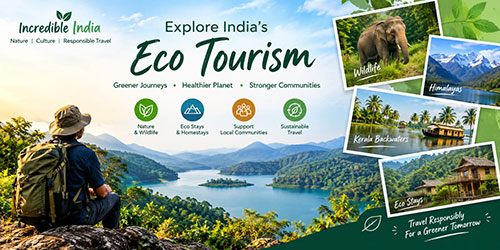
Each part of India can offer some hill holidays destination in the package.
Now in modern India, landscape architecture an ecological system in which typography, hydrology, geology, landuse, vegetation, wildlife, climate are the critical elements has come into focus. Projects like Buddhist circuits with OEC (Japan help), Chandigarh, Delhi Haat (Open Shopping Mall) in New Delhi have demonstrated our commitment to have landscaping and beautification in the building system. Eco-tourists with ethnic design befitting to natural scene have come up in Kerala, Goa, Karnataka and these are now very popular with tourists.
Delhi under the aegis of Delhi Tourism an environment friendly recreation park in 20 acres of land at Said-ul-Ajaib in New Delhi called “Garden of Five Senses” is coming up and its unique features include rocks, slopes, walkways cuisine! Five-star deluxe hotels have not only adopted environment friendly steps – energy saving, water saving etc. They have adopted landscaping projects in a big manner. Mughal Sheraton Hotel in Agra, and many similar Deluxe Hotels with water bodies, movement routes, lighting and tree planting made these unit most Eco-friendly venue for tourists. Another important thing to note is the use of solar energy by the hotel trade where by the load on the electric grid network is reduced. Such steps also help to have clean and renewable energy and its pollutant free usage. At Pragati Maidan Expo Complex, an informal atmosphere with lot of waterbodies, greenery, eateries has been created so that people can be at home both for business and pleasure. In Delhi “A Clean and Green Delhi” campaign is on. One can stand a top of the hotels and see a carpet of tree cover over the city. In Mumbai, The Orchid Hotel pioneer in introducing the first eco-friendly hotel which takes care of guests and concern for the environment. Now most of the new entrepreneur in tourism activity are very sensitive to major environment issues and follow strict guidelines.
There are some special tourism areas in India which are primarily known for eco-tourism holidays. Kerala with boats cruise on the beautiful backwaters, spice gardens, coconut trees, Periyar forests and Wildlife, unspoilt Palmfringed beaches, colourful festivals and delightful cuisine make it one of the most sought after destination in the world. In fact environmentally viable tourism is the main stay of Kerala’s new forays. Resorts at Virgin Island and remote hills like Pathiramanal, Vagamon and Thenmala – belong to this genre – Bekal, the quiet sea side hamlet is all set to become Asia’s first beach destination with many more private players evincing Interest. Vagamon the scenic hill station in Kottayam district spreading over 12,500 hectares, is awaiting development as one of the first Eco-tourism resorts in Kerala. Pathiramanal Island near Kumarkom has been transferred to the Tourist Resorts Kerala Ltd – Oberoi Group tie up to be turned into one of the most fascinating eco-friendly resorts in the world without upsetting the pristine charm of the region. Facilities are being setup for viewing wildlife at close quarters without disturbing the ecological balance of the regions. Various eco-development councils and State Forest Department together have programmed safe trekking tours deep into the jungles. For a tourist, houseboat gliding along the vast green expanse of the backwaters is the most amazing spectacle. Even more enchanting is a holiday on these houseboats better known as “Kettuvallom” which is a ecofriendly product and very popular with tourists.
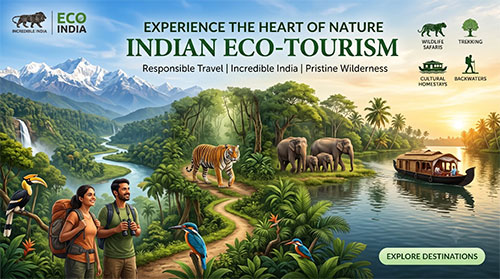
The houseboat operators are mostly located in the four backwater districts of Kollam, Alappuzha, Kottayam and Kochi. From these areas they offer exotic backwater holiday packages. The backwaters with rejuvenation Ayurveda (Indian Traditional Medicine System/Herbal Treatment) against a backdrop of pristine nature have really drawn the attention of tourist all over the world. We had focussed promotions by projecting these two aspects – backwater and Ayurvedic treatment. Our marketing efforts have paid off well. Kerala is now declared among the National Geographic Traveller Magazine “A Paradise Found” among the 50 must see destination of a life time. Neighbouring state of Karnataka also offer vacation with mountains, forests, lakes and health packages purely based on natural system of medicine (Ayurveda). Some resorts like Cauvery Fishing & Nature Camp at Bheemeshwari, Galibore and Doddamakali (near Banglore between 90 to 100 Kms on Kanakapura-Kollegal Highway) offer both Adventure and nature lovers an unique experience. Some resorts like Cauvery Fishing & Natural Camp world renowned home to the great Mahseer, the first and the longest tropical sporting fish found known to mankind is on the Cauvery River (majestic and sacred River of South India). In the camp, relax on a hammock in the Sylvian grove and listen to the soothing music of birds – watch the antics of the monkeys and the rustling of the grizzly giant squirrel as it hastily scrambles up a tree. You have also the chance to see a herd of elephants on the other side of the river to be greeted by spotted deer sambar or four horned antelope while you walk through the jungles. November to March is the main season and Jungle lodges to Resorts Ltd. can help in organising special packages for interested tourists. They also organise wilderness camps at Dandeli on the bank of Kali river - Kaval Caves (25 Kms from Dandeli) or tribal tour or visit to monolithic granite syntherirock deep inside the Dandeli Wildlife Sanctuary (Forest Lodge is available for accommodation). Similarly Kabini river Lodge, Karapur in Nagarhole National Park is perfect getaway for nature lovers. The tranquil backwaters of the Kabini River present an ideal setting for ecofriendly vacation. Once the hunting lodge of the erstwhile Maharaja of Mysore, Kabini River lodge is today rated as one of the top 5 wildlife resorts in the world (rated by British Tatler’s Travel Guide). Kabini is place to see - elephants and one can see numerous herds at a time. It is located at Karapur at a distance of 220 Km for Bangalore and 80 kms from Mysore on the Mysore-Mananthavadi Road. The Lodge has a colonial style and equipped to accommodate 50 persons Ms.Jungle Lodges and Resorts Ltd., can help in making arrangements. There are other eco-friendly holiday options in Karnataka like Kythadevara Gudi (K.Gudi) camp in B.R.Hills sanctuary (86 kms from Mysore) and 225 kms from Bangalore close to Coimbatore at an altitude of 3500 feet to 5000 ft. and the area has blend of wildlife sanctuary and hill station and maintain a pristine glory for the nature ethnic lovers. Loghut and olden days Maharaja’s Hunting Lodge provide 30/40 people accommodation at one time.
Scuba Diving at Devbagh Beach Resort, Karwar, Indus Ayurvedic Resorts Bangalore, Golf Village, Bangalore and many such venues offer special holidays for the eco-enthusiasts. Like Karnataka, Andhra Pradesh, Tamil Nadu other two states in the south of India have equal opportunities for nature lovers to visit Mountains, Parks, Forest, Wildlife, Health packages etc. Kodaikanal Lake, Ooty Lake and Ooty Hill Resort, Conoor in Tamil Nadu and Arakku Valley in Andhra Pradesh are some of the places which can be mentioned. These are easily approached and have good accommodation facilities.
Similarly Goa is important Eco-tourism destination in India. The hotels like Leela, Taj Resorts are samples of Eco-friendly resorts available there. These are five-star hotels camouflaged with greenery around. Rishikesh in Uttar Pradesh with the river rafting (white water tourism) yoga, mountain walks, trekking, Angling etc., is getting very popular with younger generation tourists.
In Rajasthan, Camel Safari, Horse Safari, Elephant Safari, desert driving and typical village life of Rajasthan provide unique Eco-experience. In Rajasthan, there is one community known as Bishnois and they have been seen to believe how human being, nature and wildlife can live together even in this 21st century. Thus endless options are available in every part of India for naturalists, Researchers and Eco-holidayers.
Ministry of Tourism has also formulated Eco-tourism guidelines for regulated and sustainable Tourism which have focussed respect for the frailty of nature to leave behind the rich natural heritage for future generations to enjoy. Leave only foot prints, take only photographs but do not take away from natural areas and heritage monuments; encourage local culture, respect local traditions and help in their conservation efforts; do not buy products made from endangered plants or animals as wildlife skins, ivory, tortoise shell; Always follow designated trails so that animals, plants are not disturbed and try to respect the natural habitats, and support them and those products which promote the cause of environment protection etc., all these have been focussed in the Eco-tourism guidelines. Most of our tour operators who operate tours in the fragile nature zones, have adopted these ASTA eco-practices (American Society of Travel Agents) for the Ecotourism business and organise a briefing session before the start of the tours in the forests, mountains to educate their clients. Like airlines do inside the air craft before the flight departs. Being late comer in tourism, we have learnt enough from the mistakes of man; tourism developed countries and have imitated right steps. No doubt, very few countries in the world can provide such varied options as India can mainly being a vast country.
It is environmentally yours! INDIA - Explore now.
Dr Gour Kanjilal
[ Author And Tourism Represtitive Government Of India ]
Explore more opinions, analysis, and insights by Sujit Chatterjee .